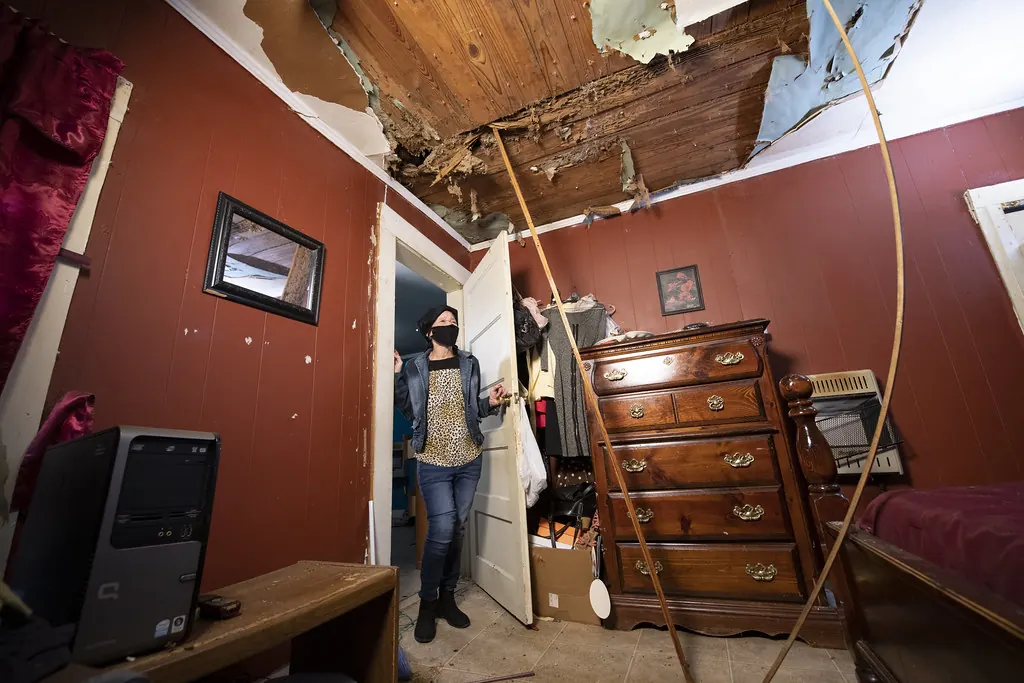
What water damage claim appraisal handles
Sudden and accidental water damage from inside a home or building is covered under many Montana property policies. A dishwasher hose bursts, a water heater fails, a supply line to the upstairs toilet lets go while you are at work. When the insurer accepts the claim but its estimate does not pay to dry, tear out and rebuild properly, water damage claim appraisal lets a panel settle the amount.
How a water claim moves through appraisal
- Cause and timeline. We note what failed and when. Policies treat sudden discharges very differently from slow, long-term leaks.
- Moisture mapping. We review the drying company’s logs and readings, if any, and check for wet framing, subfloor and insulation the first estimate missed.
- Tear-out and rebuild scope. We write the demolition, drying, mold-prevention and rebuild work room by room.
- Matching. Continuous flooring, cabinets and countertops often run through several rooms. Replacing one section can leave a visible line.
- Panel. We work with the carrier’s appraiser and bring open items to the umpire.
Common disputes on Montana water losses
- Drying equipment days. Dry winter air helps evaporation, but cold slab floors, log walls and finished basements can hold moisture longer than the carrier’s standard timeline assumes.
- Basement finishes. Many homes in Missoula, Bozeman and Great Falls have finished basements. Water travels under carpet pad and behind paneling, and the hidden damage is where estimates fall short.
- Continuous flooring. Hardwood or LVP that runs from kitchen to hallway to living room may need to be replaced across the full run to match.
- Cabinets and counters. Swollen lower cabinet boxes often cannot be swapped out alone without damaging matching uppers and countertops.
- Mold limits. Many policies cap mold remediation. Prompt drying limits that cost, but where mold is present, the cap still controls.
Flood is a different animal
Most homeowners and commercial property policies exclude flood, meaning surface water from rivers, snowmelt runoff or heavy rain. Montana sees real flooding: rain on snowpack in spring, ice jams on rivers, and events like the June 2022 Yellowstone River flood that damaged homes in Gardiner, Red Lodge and the Livingston area. Flood coverage typically comes from a separate policy, often through the National Flood Insurance Program (NFIP), which has its own rules and its own appraisal provision for some disputes.
If the water came from outside and rising, your standard policy may not respond, and water damage claim appraisal under that policy will not change that. Sewer or drain backup and groundwater seepage are also commonly excluded unless you bought an endorsement.
Frozen pipes in a vacant or seasonal property raise their own policy conditions about maintaining heat. If your loss happened at a cabin or a home you were away from, see our page on snow load, ice dam and freeze claims.
When appraisal is not the right step
If the carrier says the leak was gradual, that the water came from outside, or that a heat or vacancy condition was not met, the dispute is about coverage. An appraisal panel cannot overturn that decision. Talk to a licensed Montana attorney about denials. If the claim is accepted and the gap is about money, water damage claim appraisal is worth a look.
Getting a second look
Before demanding appraisal, have the carrier’s estimate checked line by line with an insurance estimate review. Our Bozeman page discusses local pricing for basements and finish work, which affects many water claims in Gallatin County.
Questions about water damage claims
Is flood damage covered by my homeowners policy?
Usually not. Most homeowners and commercial property policies exclude flood, which generally means surface water from rising rivers, runoff or heavy rain. Flood coverage typically comes from a separate flood policy, such as one through the National Flood Insurance Program. Read the water exclusions in your own policy, because details like sewer backup coverage vary by form and endorsement.
The drying company left after three days, but my walls still feel damp. What now?
Document it. Take photos, note dates, and ask for the drying company’s moisture logs. Lingering moisture in framing, subfloor or insulation can lead to mold and further damage. If the carrier’s estimate assumes everything dried, that may be a scope dispute for appraisal. Tell the carrier promptly about any ongoing moisture in writing.
Why would my whole floor need replacing for a leak in one room?
If the flooring runs continuously through several rooms without a break, replacing just the wet section can leave a visible seam, a color change or a height difference. Whether your policy pays for a continuous run depends on its matching language and the specific floor. That is a common amount dispute appraisal panels are asked to decide.